اَندَریم پرَکاش نیبَر ژھۆٹُم
The light within, I cast outward. Lal Ded, fourteenth century.
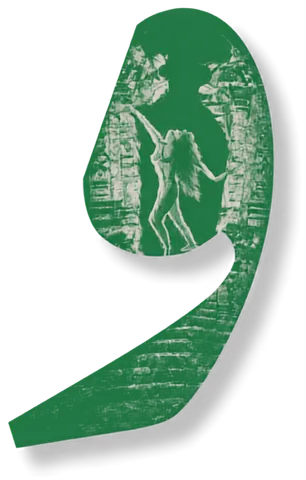
In the fourteenth century Lal Ded composed her vaakhs: utterances, the oldest Kashmiri that survives. She wrote nothing down. For seven centuries the verses lasted the only way anything lasts, because people carried them, mouth to mouth, mother to child, until the language they were made of had a literature to belong to.
We took our name from her form because the mandate is the same: carry what the valley cannot afford to lose forward, by whatever means the century provides. Her means was memory. Ours is the machine. The name came from literature, because that is where this movement began. The mandate no longer stops there.
Vaakh Research exists to take on every problem Kashmir has that intelligence can touch: in its language, its orchards, its rivers, its clinics, its looms, and its archives.
Begin with the pattern. Artificial intelligence is remaking medicine, agriculture, climate response, and language itself. It is being built in a handful of centers, trained on a handful of languages, tuned to a handful of markets. The periphery receives it late, mistranslated, or not at all.
Now make it specific. A flood model that has never seen the Jhelum. A diagnostic tool with no interface a Kashmiri grandmother can use. A crop system trained on orchards a continent away. A language of seven million speakers, classified vulnerable by UNESCO, invisible to the machines everyone now types into. None of these gaps will be closed from outside, because none of them is anyone else's priority.
This is the ground Vaakh works on. Not one field: a valley. Its problems taken up as research, solved to standard, and held in trust for the people they belong to.
Vaakh was founded as the sister of Yikvot, the Kashmiri literary movement: the platform where the language's writers publish, its readers gather, and a library of thousands of Kashmiri books has been brought back within reach. The first program grew from that library. The method it proved, data gathered with consent, built to standard, held in trust, does not stop at literature.
Two organizations, one movement, one test: that Kashmir meets this century on its own terms.
Every program is judged by what it returns to the valley.
Data comes from people. It is collected under agreement, with provenance recorded and revocation honored.
Archival-grade, benchmark-tested, built for decades.
Guardianship, not distribution. Access by agreement, in service of the valley.
Vaakh operates under one governing idea: data sovereignty. The words, voices, fields, pages, and patterns of Kashmir are the valley's own property. We hold them in trust, license them by agreement, and refuse the default of the field, which is to treat a people's data as free raw material.
What we build is for use, by the valley and by those who serve it. It is not for taking.
Vaakh is a collective of researchers, engineers, clinicians, agronomists, writers, and scholars, in the valley and beyond it, working alongside the people and institutions who make the work legitimate. It is built to outlast its founders.